
Shipping containers show up in a lot of distillery business plans. They’re cheap, they’re fast to source, they photograph beautifully for a taproom concept, and they carry a certain industrial-chic appeal that fits the craft beverage aesthetic. We get asked about them constantly: “Can we just put our still in a shipping container and skip some of the code headaches?”
The short answer: no. If you set that container down permanently, the building code doesn’t care that it started life on a cargo ship. It’s a building now — and it has to meet every requirement a stick-built structure would.
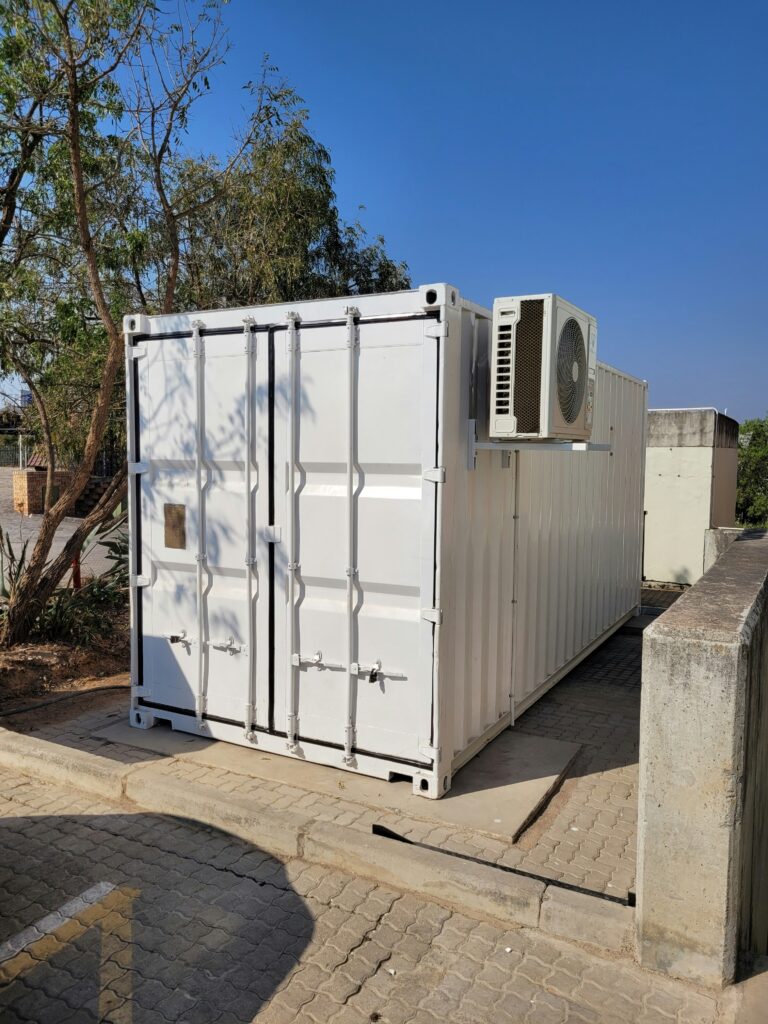
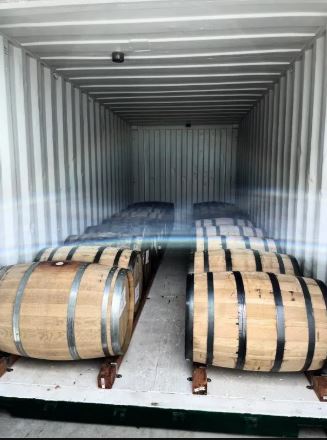
The IBC’s definition of “Building” (Section 202) is intentionally broad: it’s any structure used or intended for supporting or sheltering any use or occupancy. There’s no carve-out for how the structure was manufactured, and there’s no exception for steel corner-post construction. A shipping container that’s been placed on a foundation or slab, leveled, tied down, hooked up to power/water/HVAC, and used to store product, house equipment, or shelter people is functioning exactly like a building — so it gets classified as one.
The key trigger is permanence. A container sitting on a job site for a few weeks as a temporary job-box or a container that’s licensed and mobile on a trailer is a different animal — those can sometimes be treated as vehicles or temporary structures under separate provisions. But the moment a container is intended to stay put and be used on an ongoing basis, most jurisdictions will require it to be permitted as a building, full stop.
That means:
This is where we see the most confusion. Owners will point to the fact that outdoor storage of flammable liquids has more lenient rules than indoor storage — smaller footprint requirements, no rated construction — and assume that putting product inside a shipping container keeps them in that “outdoor” category, since it’s not a real building.
It doesn’t work that way. Once you enclose flammable liquid storage inside a structure with walls and a roof, the code stops evaluating it as outdoor storage. As we outlined in our outdoor storage post, IBC 414.6.1 and IFC 5004.13 only let you keep the more favorable outdoor classification for unenclosed weather protection — think open canopies, not fully enclosed containers with doors. A shipping container has walls on all sides and a roof. That’s an enclosed structure, and it’s evaluated under the (stricter) indoor storage and building code provisions accordingly.
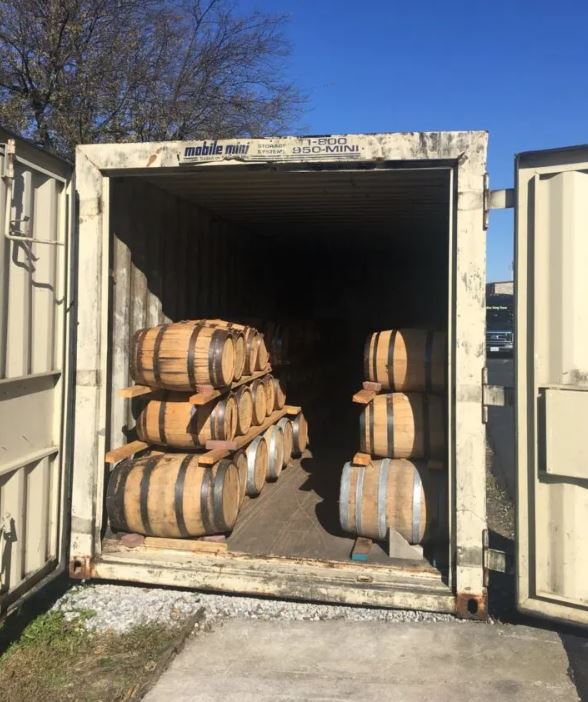
None of this means a shipping container is a bad idea — plenty of distilleries use them successfully for barrel storage, chemical/hazmat lockers, or overflow production space. It just means the container needs to be designed into your overall code strategy from day one, not treated as a workaround. In some cases, a container can actually function as its own control area, letting you separate flammable liquid quantities from your main production building and expand your overall site MAQ — an approach we detail in Utilizing Control Areas to Expand MAQs in Distilleries. Used correctly, a container can be a smart, code-compliant tool. Used as an end-run around permitting, it becomes an expensive problem the moment your AHJ walks the site.
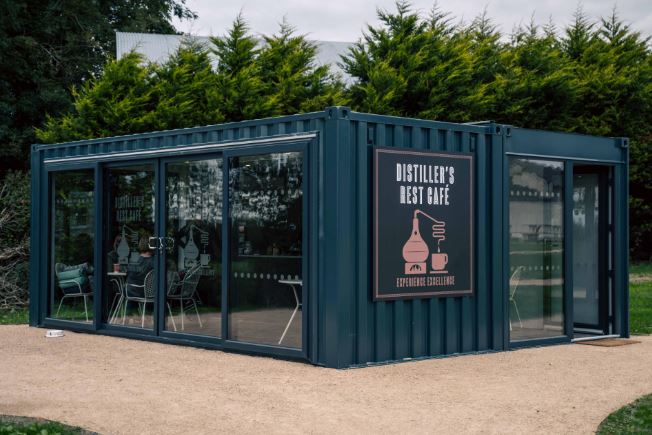
A shipping container is steel, not a loophole. The second it’s permanently sited and put into service, it’s a building in the eyes of the code, subject to the same occupancy, fire rating, egress, ventilation, and sprinkler analysis as anything else on your property. The good news is that with the right code strategy — control areas, proper separation, and an early conversation with your architect or life safety consultant — a container can still be a genuinely useful, cost-effective piece of your distillery layout.
Schedule a consultation or download our free Distillery Design Guide to get oriented on the key design and code considerations before your first meeting.
Dalkita Architecture & Consulting works with craft distilleries across North America, providing full-service architectural design, life safety consulting, and code compliance support from site selection through certificate of occupancy.