
The IBC (International Building Code) mandates certain fire ratings on exterior walls of buildings when in close proximity to adjacent property lines. The fire rating on the exterior wall if based on proximity, building construction type, and occupancy. Here we will explore when exterior wall ratings are required in buildings. This post references the 2021 IBC and IRC.
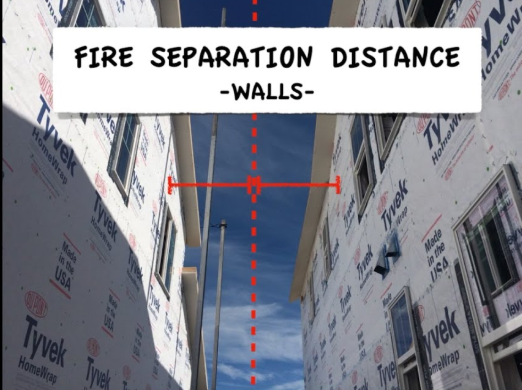
Fire separation distance is defined in the IBC as:
The distance measured from the building face to one of the following:
The distance shall be measured at right angles from the face of the wall.
On a simple property/ lot with 1 building, it is measured as the distance to the property line. Against the street, it is measured to the centerline of the street. If a property has multiple buildings on it, you can choose where the imaginary line goes, usually halfway between the buildings. Usually the road is wide enough that walls facing roads do not require fire ratings.
Table 705.5 of the IBC is where we find the exterior wall ratings based on fire separation distance. For all occupancies and construction types, when the FSD is under 5 ft, some fire rating is required. For example, a B occupancy building, with a wall at 3 ft from the property line, in a type VB construction (wood construction) would require a 1 hr rating.
Once you exceed 10 ft FSD, some occupancies have exterior wall ratings drop off. Every occupancy except H has no exterior wall rating required when FSD is greater than 10 ft in type VB and IIB buildings.
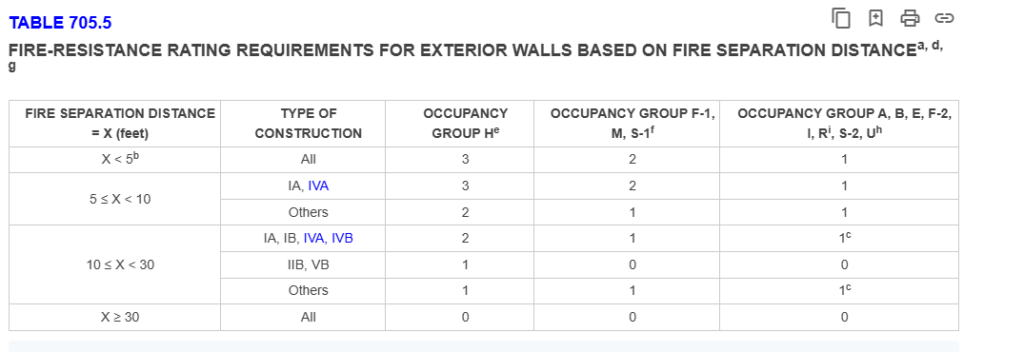
Once FSD reaches 30 ft, no rating is required for all occupancies and all construction types.
The International Residential Code (IRC) applies to the design and construction of one- and two-family dwellings and townhouses, including their associated accessory structures. The IRC has slightly different rules for exterior wall ratings based on FSD.
Table R302.1(1) tells us that walls shall be 1 hour rated if under 5 ft, and if they are 5ft and over, then no rating is required.

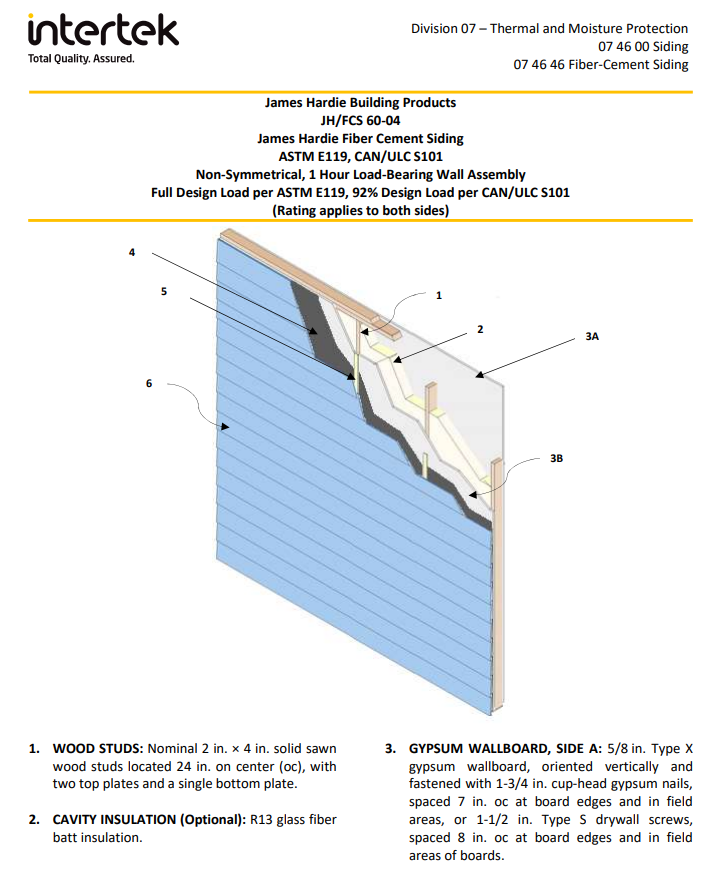
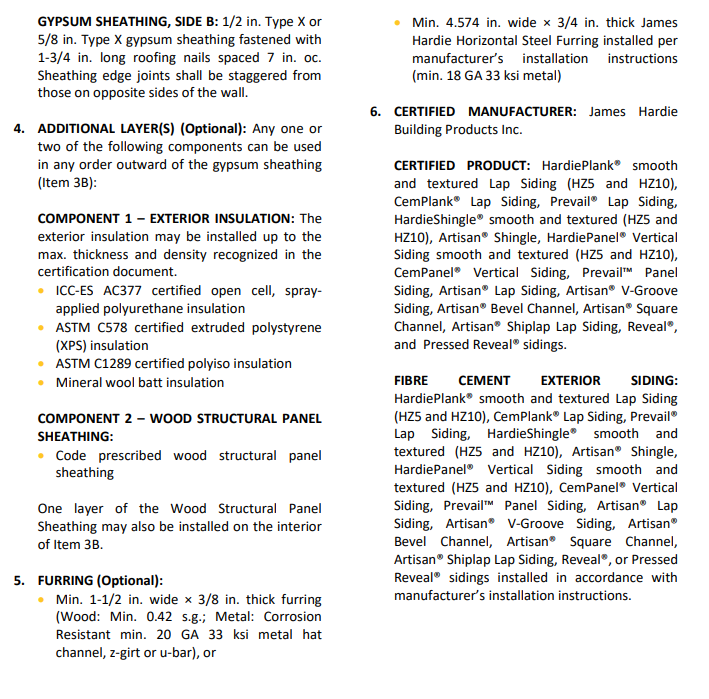
An exterior wall rating can be achieved in various ways with various materials The assembly should be listed like an organization such as UL or Intertek and tested. Systems often include exterior gypsums boards/ cement boards, stucco, or fiber cement cladding such as hardiboard. An example is shown below and at the following link:
The IEBC (International Existing Building Code, 2021) has exceptions for fire ratings on exterior walls for existing buildings. In general, potential upgrades are only triggered when an alteration and/or occupancy change occurs.
Per IEBC 1011.7.1, when undergoing a change of occupancy, you only need to consider the exterior wall rating if changing from a lower to higher hazard category per the chart below:
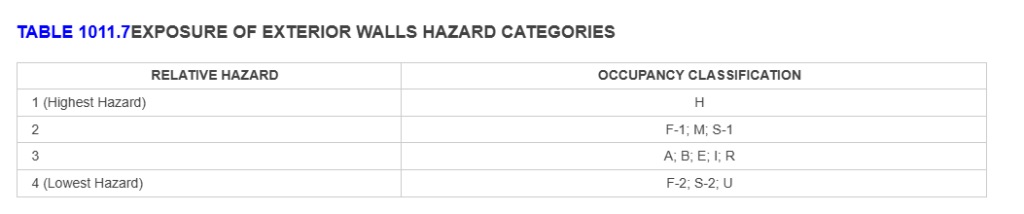
If you do alteration work without a change of occupancy, that would also not trigger needing to consider exterior wall ratings based on FSD, unless the work itself involved the exterior wall in question.
We wont get too deep into this as it deserves its very own blog- but there are also rules for overhangs (projections), and openings on walls that are in close proximity to property lines / FSD. Table 705.8 in the IBC shows us opening options for walls based on FSD. 705.2 of the IBC has rules for overhangs/ projections.
Article By: Matthew Taylor-Rennert