
A lot of Kauaʻi homeowners are sitting on more potential than they realize. Whether you’re on a residential lot in Kapa’a or a few acres of agricultural land in the hills, there’s a good chance you’re eligible to add a dwelling unit to your property — and the process is more navigable than most people think.
This guide breaks down the three types of secondary units allowed on Kauaʻi, what the permitting process actually looks like, and how the rules differ depending on your zoning. If you’ve been thinking about adding rental income, housing a family member, or simply making better use of your land, read on.

Kauaʻi County recognizes three slightly different categories, and which one applies to you depends on your zoning and what you want to use the unit for.
Guest House
Guest House zoning code definition: Means a building with a floor area of no more than 800 square feet, may contain a kitchen, and is used for dwelling purposes by guests, tenants, or owner(s). A Guest House shall not be used for a transient vacation rental (TVR) or homestay operation within or outside of the visitor destination area (VDA).
ARU (Additional Rental Unit)
ARU zoning code defintion: Means a rental unit that includes a kitchen, bedroom(s) and bathroom facilities, attached or detached from a dwelling unit that is used for the purpose of a long term rental unit. When built within an existing residential dwelling unit or attached to one, the two units together shall constitute a multi-family dwelling. An additional rental unit is not a dwelling unit.
ADU (Additional Dwelling Unit)
ADU zoning code definition: Means a structure or portion thereof designed and used for single-family residential purposes as permitted under Article 15 of this Chapter, and which can be detached from or attached to an existing residence, to be used for single-family occupancy and containing one kitchen.
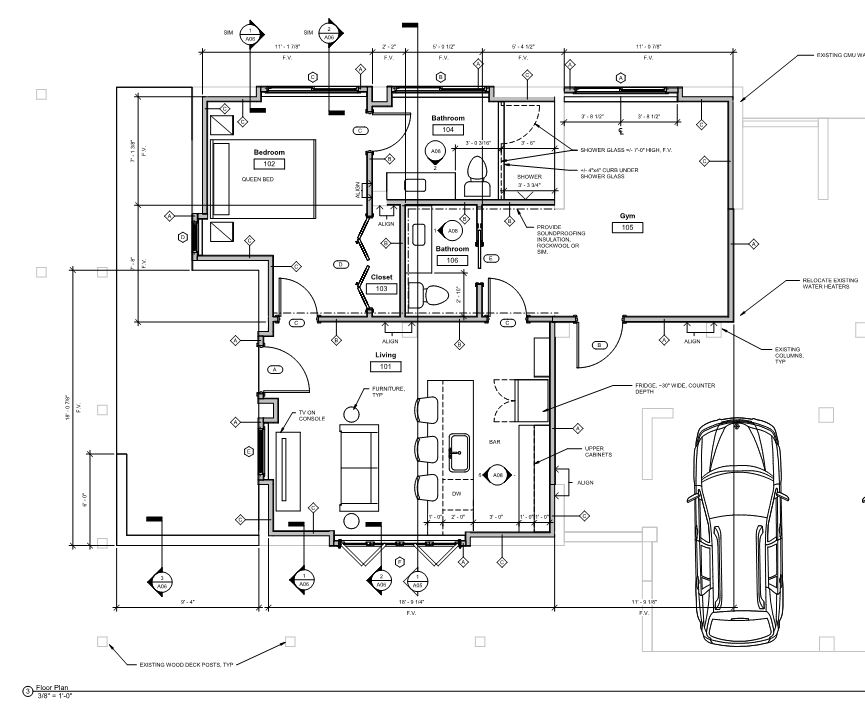
The Permitting Process: What to Expect
This is where most people get stuck — not because it’s impossible, but because the process involves multiple agencies and the sequence matters. Here’s the general flow:
- Start with the Clearance Form– Before you can apply for a building permit, you need a completed ADU/ARU/GH Clearance Form signed off by multiple departments. Kauaʻi County now processes these online through their planning portal (connect.kauai.gov). The Planning Department reviews the form first, then routes it to other agencies. At this stage, the design can be pretty minimal, just identifying the location and size of the unit on a site plan.
- Permit Application- After you receive all the sign offs on the clearance form, you can submit full drawings for a building permit. This requires stamped architectural plans. Every department and agency will more intensely review your design for compliance with all regulations. This typically includes, building, zoning, flood review Wastewater, the Department of Water (water meter clearance), Public Works, Fire, and others. The review process can take several months of back and forth review comments and responses from the departments.
- Construction and Inspections: Hooray! You received your permit. Now, Construction proceeds under the permit, with inspections at required milestones. Final sign-off closes out the permit and legalizes the unit.
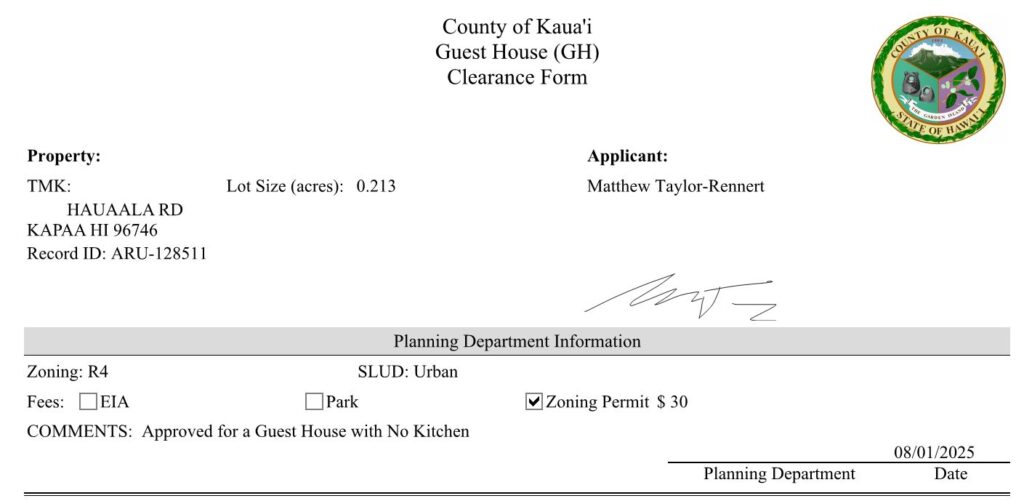
No — ADUs and ARUs on Kauaʻi require a minimum six-month rental period. They’re not eligible for short-term vacation rental use. Guest houses on AG land have their own restrictions as well. If short-term rental income is your goal, the zoning and permitting path is different, and you’ll want to discuss it with a planning professional before proceeding.
Generally no. ADUs and ARUs cannot be subdivided or sold separately from the primary dwelling. Kauaʻi County passed Ordinance 1166 in late 2024 specifically prohibiting guest houses from being separated into their own condominium units as well.
It varies. A well-prepared application with clean clearance form routing can move through the permitting process in a 4-5 months. Projects that stall usually do so because of missing documentation at one agency or unclear site conditions. Having your plans ready and your pre-checks done before submitting makes a significant difference. Also, reaching out to departments before officially submitting can help resolve questions before it officially hits their desk.
You’ll need stamped architectural plans for the building permit. Beyond the legal requirement, having an architect involved early — especially for the clearance form phase — helps identify potential issues before they become expensive delays.
Dalkita is a licensed architecture and building consulting firm based on Kauaʻi. We help homeowners navigate the ADU, ARU, and guest house process from clearance form through permit approval.
Contact us for a consultation, or reach us at dalkita.com