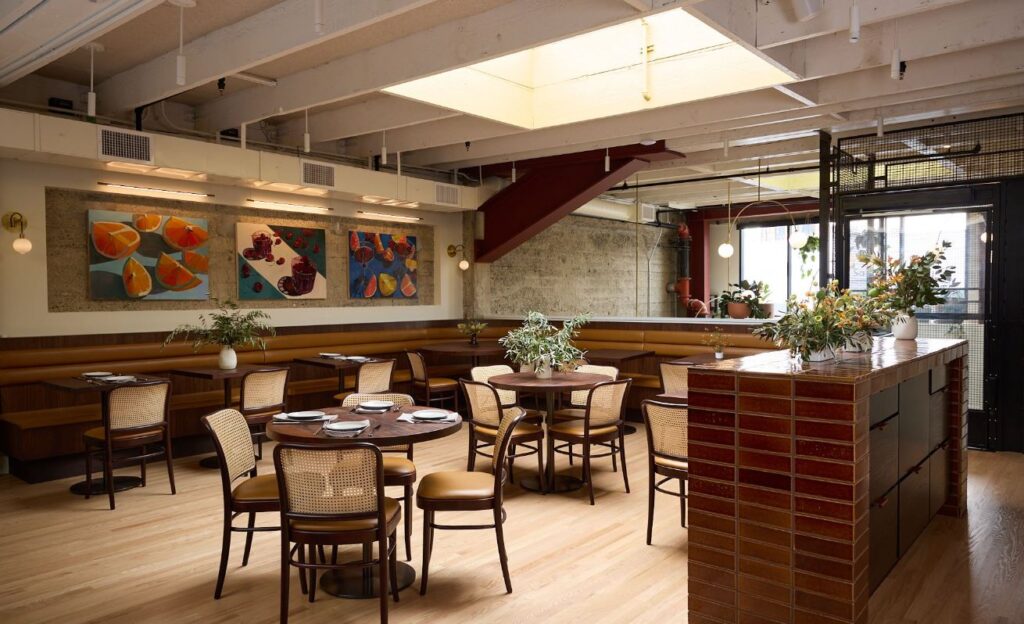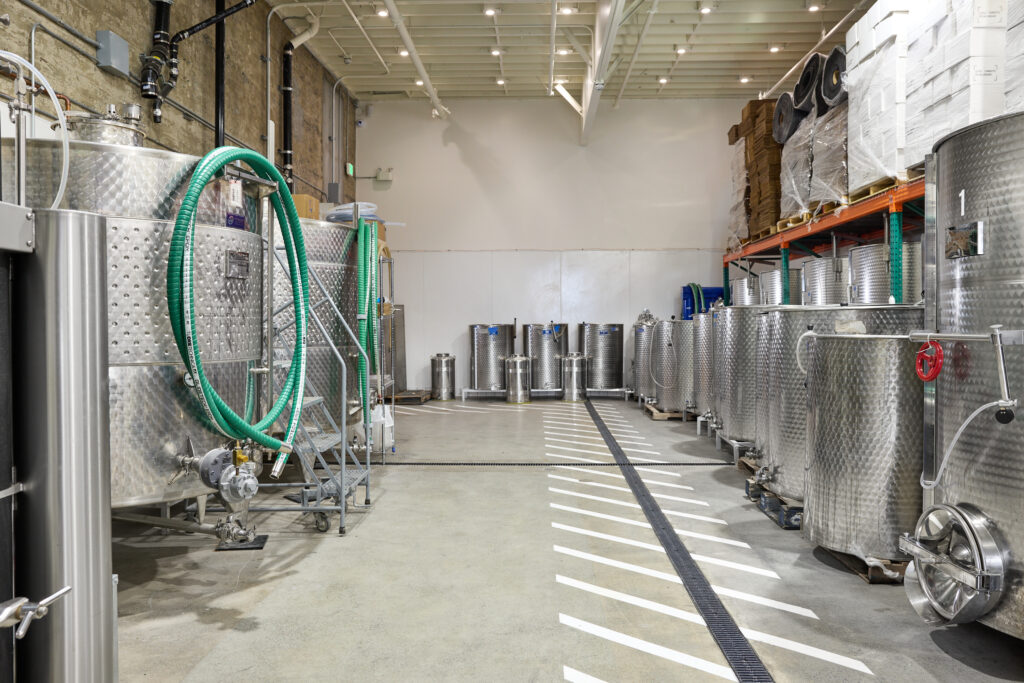
When a craft spirits brand sets out to transform an existing urban industrial building into a working distillery and public tasting room, the regulatory path forward is rarely straightforward. For Brucato Amaro, Dalkita provided code consulting services throughout the design and permitting process — helping the project team navigate one of the more complex intersections in building code practice: a combined hazardous occupancy and assembly use within an existing structure.
We partnered with the local architect of record, Studio BBA, to deliver code analysis that kept the project moving without compromising on safety or compliance.
Craft distilleries aren’t simply manufacturing facilities — they’re increasingly destinations, with public tasting rooms, retail, and hospitality woven into the same footprint as production operations. That combination creates layered code obligations that touch nearly every system in the building.
On this project, our scope covered four interconnected areas:
Hazardous occupancy classification. Distillery production involves flammable liquids at quantities that trigger H-occupancy thresholds under the IBC. Accurately classifying the space — and carving out the right occupancy boundaries — was foundational to everything else.
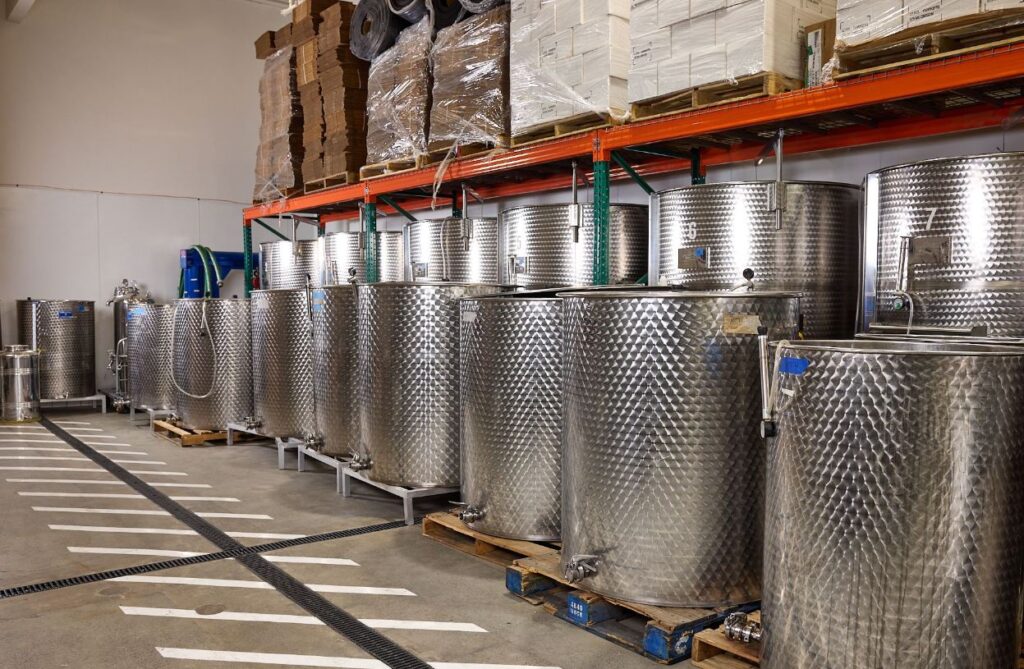
Secondary containment. Flammable liquid storage and use areas require engineered containment systems to prevent spills from migrating. We coordinated containment design requirements with the project team early, so the structural and floor detailing could be resolved before construction documents were finalized.
Sprinkler and fire alarm coordination. An H-occupancy designation drives specific suppression and detection requirements beyond what a standard commercial build-out would require. We worked through system design criteria with the mechanical and fire protection engineers to ensure the approach was both code-compliant and constructible within the existing building’s constraints.
Egress. The public assembly component of the program — the tasting room — adds occupant load calculations and egress requirements that have to be reconciled with the production areas. In an adaptive reuse scenario, existing door and corridor configurations rarely line up perfectly with what the code requires, so careful egress analysis is essential.
Adaptive reuse projects carry a distinct set of pressures. The building is already there — its footprint, structure, openings, and systems are fixed constraints. Code compliance has to be threaded through what exists, not designed from scratch.
That reality makes early, thorough code analysis especially valuable. On Brucato Amaro, our involvement during the design phase — rather than at permit submittal — gave the team time to respond to findings without redesigning under deadline pressure. Issues around containment detailing, occupancy separation, and egress geometry were identified and resolved while they were still relatively inexpensive to address.
The completed project is a handsome adaptive reuse that respects its industrial bones while welcoming a public audience into a working production environment.
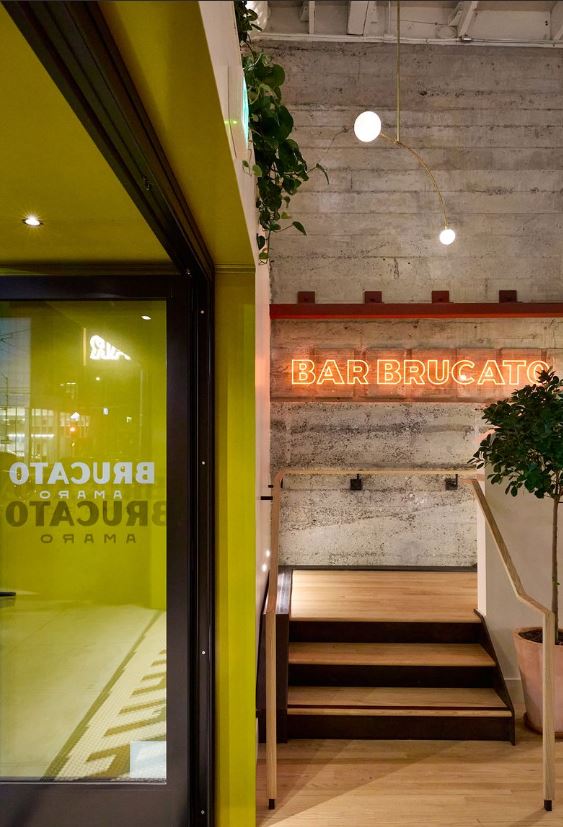
Dalkita’s role was behind the scenes — but the code framework we helped establish is embedded in every detail of how the building operates safely. That’s what good consulting looks like: invisible in the finished product, essential to getting there.
Photography by MDX / Molly DeCoudreaux. Local architect of record: Studio BBA.
Starting a Distillery Project? Let’s Talk.
If you’re in the early stages of planning a distillery — or even just kicking the tires on a space — our Distillery Design Guide is a great place to start. It covers the key design and code considerations you’ll face, in plain language, before you’ve spent a dollar on design fees.
And if you’re ready to dig into the specifics of your project, reach out to us directly. We work with distilleries across North America and we’re happy to talk through what you’re building.