
Here we have a sort of “cheat sheet” of some of main requirements we see popping up for single family or similar residential design from the IRC (International Residential Code), along with applicable 2021 IRC references. This applies to new construction, although much of it may still apply for remodels/ additions, etc. Hope it helps you with your project and reach out to Dalkita with any of your design or code consulting needs!
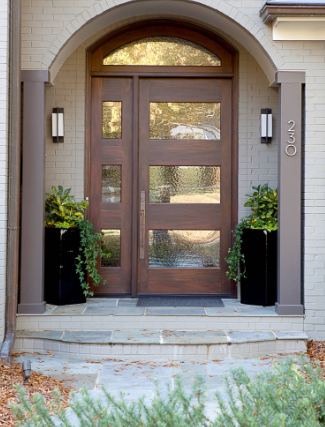
R311.2- Residences must have at least 1 egress door that has a clear width of 32″ minimum and 78″ high. These must be readily openable from inside, so standard sliding doors typically cannot count.
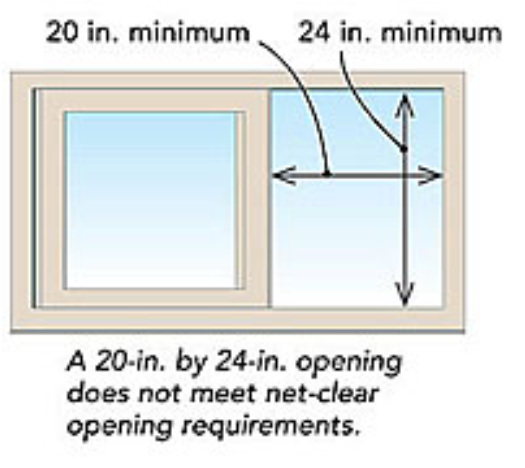
R310.1- Legal bedrooms must have at least 1 emergency egress window to the outside. They must be at least 5.7 sf for above grade floors, and 5 sf for grade floor openings. The bottom of the opening/ window sill must be no more than 44″ above the floor inside, and the window must be at least 20″ wide and 24″ high.
R311.7.5.1- Max riser height= 7 3/4″
R311.7.5.2- Max tread depth= 10″
R311.7.2- Min Head height= 6′-8″
R311.7.8- Handrail @ 36″ high on 1 side where stairs have 4 or more risers
R311.7.1– 36″ wide
R307.1
– 21″ in front of toilets and sinks
-30″ wide space for toilets
R312 – Provide guardrails whenever theres a drop-off of 30″ or more. Guards shall be 36″ high minimum with openings <4 inches.
R305.1– 7 ft ceiling height in all habitable rooms, except 6′-8″ in bathrooms and laundry rooms.
R302.6- provide 1/2″ gyp board on walls separating garages and habitable spaces. Garages with Habitable spaces above the garage require 5/8″ type “x” gyp bd at the ceiling.
R302.5.1 Doors shall be 20 minute rated, and self closing/ self latching, usually provided with self closing hinges.
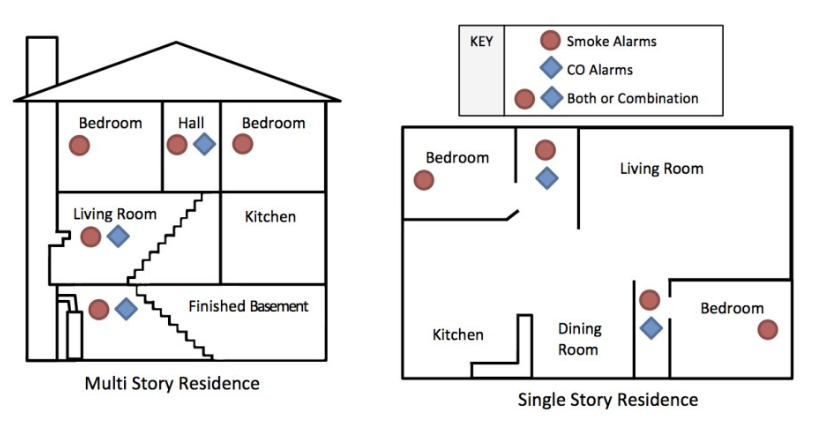
R314.3– Provide a smoke alarm in each bedrooms, outside each bedroom, and at least 1 on each story, keeping them away from kitchens and bathrooms to minimize false alarms. Smoke alarms shall be interconnected and on battery backup.
R315– CO detectors are required whenever there are fuel burning appliances or a garage is attached.. Locate CO detectors outside of each bedroom.
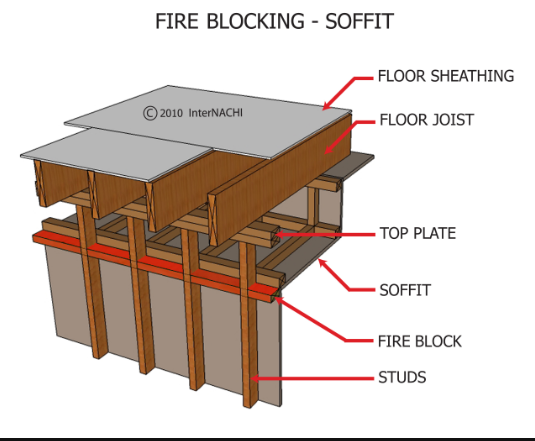
IRC302.11 – Fireblocking is required in all concealed vertical and horizontal spaces within a dwelling, such as wall cavities, floor-ceiling assemblies, attics, soffits, and chases, to slow the spread of fire and smoke. It must be installed at floor levels, at the top and bottom of walls, and at intervals not exceeding 10 feet along concealed spaces. Approved materials include lumber, gypsum board, wood panels, mineral wool, or listed fire-resistant products. Fireblocking is especially critical where vertical and horizontal cavities intersect, or where balloon framing or continuous cavities could act like a chimney between floors.
Fire caulking is required at any penetration through fireblocking or concealed spaces, including pipes, ducts, conduit, and wiring, to maintain the integrity of the barrier. Approved fire-resistant sealants, foams, or caulks must completely seal gaps around penetrations to prevent flames, heat, and smoke from bypassing fireblocking. Proper fire caulking ensures that concealed cavities remain compartmentalized and that fireblocking provides its intended life-safety protection.
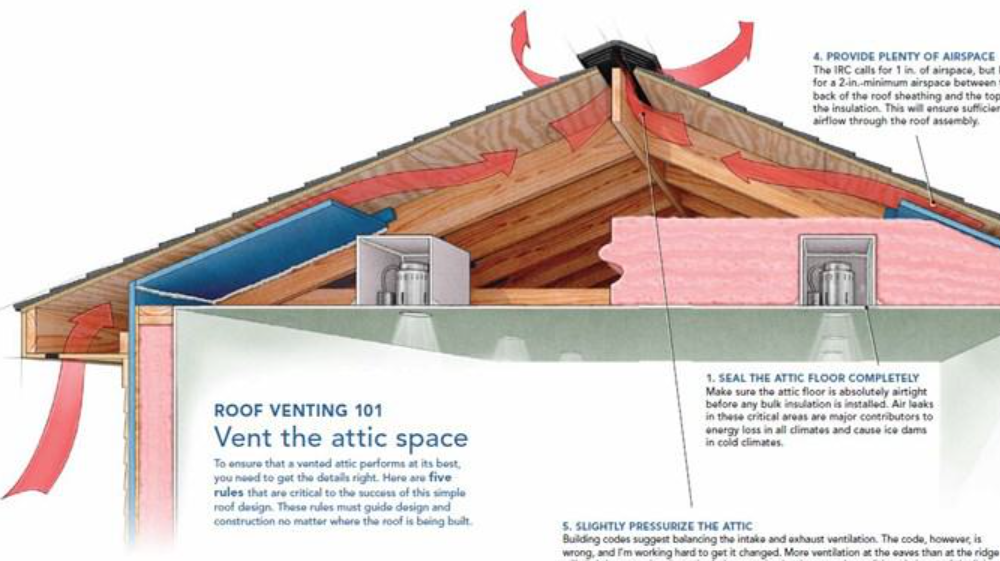
R806- Uninsulated attics must be vented. This is typically done by providing vents at soffits, and vents at the ridge or by providing roof vents. Vented area is usually calculated at a rate of 1/300 of roof area
These are just some of the main requirements we see popping up on most of our projects! Hope this helped you!
Article by: Matthew Taylor-Rennert